Contents:
- Understanding Your Hair Before You Blow Dry
- Hair Type and Texture
- Assessing Moisture Before Starting
- Essential Tools for Blow-Drying Your Own Hair
- The Blow Dryer Itself
- Attachments: The Concentrator Nozzle
- Sectioning Clips and Brushes
- How to Blow Dry Your Own Hair: Step-by-Step Process
- Step 1: Preparation and Sectioning
- Step 2: Begin with the Underside
- Step 3: Progress to Middle Sections
- Step 4: Finish with the Top Layers
- Step 5: Cool Shot and Final Pass
- Blow-Drying Straight Hair vs Wavy/Curly Hair
- Straight Hair
- Wavy or Curly Hair
- Common Mistakes to Avoid When You Blow Dry Your Own Hair
- Blow-Drying vs Air-Drying: When to Use Each
- Styling Options Once Hair is Blow-Dried
- Timeline: How Long Should Blow-Drying Take?
- FAQ
- What’s the best temperature for blow-drying hair without damage?
- Can I blow-dry my hair every day without damaging it?
- Is a paddle brush or round brush better for beginners?
- Should I blow-dry towards or away from my face?
- How do I get volume and body when blow-drying?
Most people struggle with blow-drying because they’ve never been taught the actual mechanics. You probably watched a stylist do it in 10 minutes and assumed it was magic. It’s not. Learning how to blow dry your own hair is a skill—one that takes practice but yields professional results once mastered. This guide walks you through every step, from damp hair to finished style.
Understanding Your Hair Before You Blow Dry
Different hair types require different approaches. Understanding your hair’s characteristics determines the entire strategy for blow-drying successfully.
Hair Type and Texture
Hair thickness varies. Fine hair dries quickly (10-15 minutes) but lacks natural volume and gets weighed down by heat. Thick or curly hair requires 20-30 minutes and benefits from higher heat. Straight hair dries predictably. Wavy or curly hair requires more attention to control and product application.
Porosity matters too. Low-porosity hair (smooth cuticles) resists moisture absorption and dries quickly but is prone to heat damage. High-porosity hair (raised cuticles) absorbs moisture easily, dries slowly, and can look frizzy without the right technique. Most UK hair falls into the medium-porosity category (dries in 15-20 minutes, manageable frizz).
Assessing Moisture Before Starting
The state of your hair when you begin affects drying time dramatically. Soaking wet (dripping water) hair takes 25-35 minutes to dry with a standard 1,600-watt dryer. Damp hair (no dripping, still wet to the touch) takes 15-20 minutes. Towel-dried hair (with 70-80% of water removed) takes 10-15 minutes. This is why pre-drying with a microfibre towel is essential—it cuts total blow-drying time in half.
Essential Tools for Blow-Drying Your Own Hair
The Blow Dryer Itself
For at-home use, you need a dryer with at least three heat settings (low, medium, high) and two speed settings (low, high). Budget dryers (£15-30) have one basic heat setting and unreliable airflow. Mid-range dryers (£40-80) have multiple settings and consistent power. Professional-grade dryers (£80-250) include ionic technology, ceramic heating elements, or concentrator nozzles that focus airflow.
For beginners, a £50-70 dryer with ionic technology is ideal. Ionic dryers emit negative ions that reduce frizz and speed up water evaporation by 15-20%, making your job easier.
Attachments: The Concentrator Nozzle
A concentrator nozzle (a narrow attachment that channels airflow) is non-negotiable. It focuses heat and air onto specific sections, allowing you to shape and control hair. Without it, you’re just blowing random warm air. Most dryers come with a basic concentrator. Upgrade models (£15-25) offer better heat distribution and smaller openings for finer control.
A diffuser attachment (has small cups or protrusions) is useful only for curly hair and beginners wanting to avoid frizz. For straight or wavy hair, the concentrator nozzle does 95% of your work.
Sectioning Clips and Brushes
Sectioning clips (£3-8 for a pack of 4-6) divide your hair into manageable sections, preventing tangling and ensuring even drying. A round brush (£10-25, sizes 1.25-1.75 inches for most people) or paddle brush (£8-15) helps shape and smooth hair while blow-drying. Round brushes create volume and wave. Paddle brushes smooth and straighten.
For your first attempt, a paddle brush is easier to manage than a round brush. Round brushes require coordinating the dryer, brush, and two hands—advanced technique.
How to Blow Dry Your Own Hair: Step-by-Step Process
Step 1: Preparation and Sectioning
Start with towel-dried hair, not soaking wet. Wrap your hair in a microfibre towel and leave it for 5-10 minutes to absorb excess moisture. This cuts blow-drying time by 30-40% compared to starting with dripping-wet hair.
Divide your hair into 4-6 sections depending on thickness. Thin or short hair: 4 sections. Thick or long hair: 6 sections. Clip up all sections except the lowest back section. The technique: take a horizontal line across the back of your head from ear to ear. Everything below that line is your first section. Then divide the sides and top into additional sections with clips.
Step 2: Begin with the Underside
Start blow-drying the bottom sections first. Why? Because once you dry the top layers, they fall over the bottom, making it harder to access lower sections. Always work bottom-to-top.
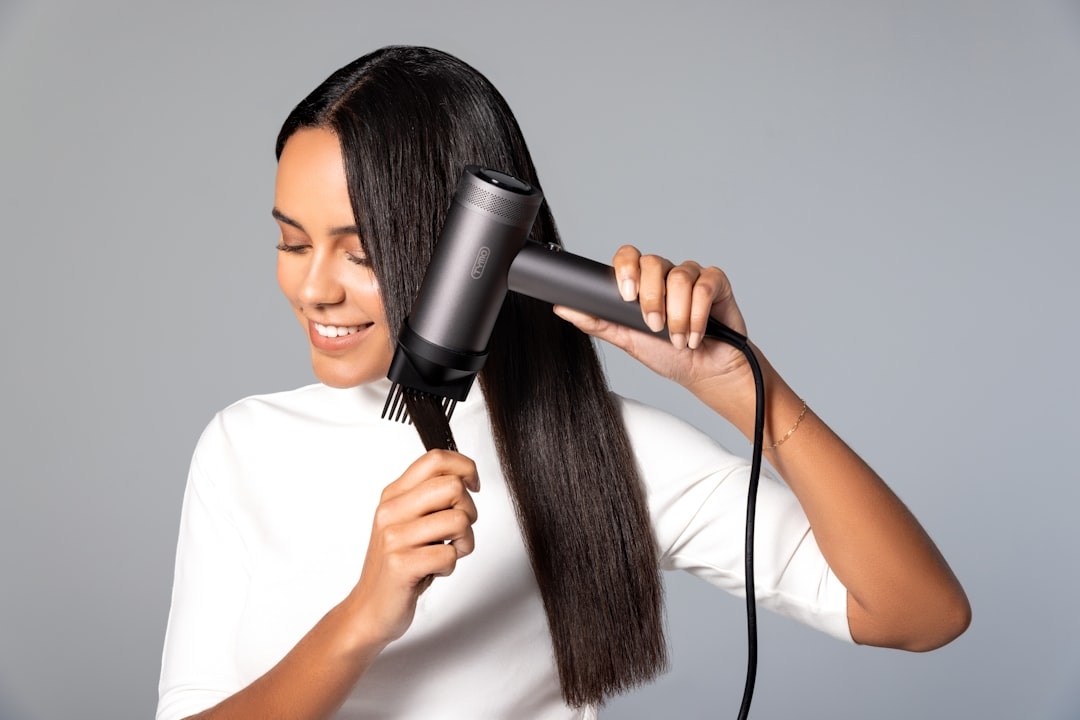
Release one lower section. Comb it smoothly. Attach the concentrator nozzle to your dryer. Set heat to medium and speed to high. Position the dryer 15-20 cm from your scalp (not touching the hair, not far away—roughly the distance of your handspan). Move the dryer downward along the hair shaft in one direction, not back-and-forth. Back-and-forth motion creates frizz. One-direction motion smooths the cuticle.
Dry for 3-5 minutes until that section feels warm but not hot to the touch and is about 80% dry. Don’t fully dry individual sections—you’re establishing the base shape.
Step 3: Progress to Middle Sections
Release your side sections one at a time. Repeat the process: comb smoothly, direct the dryer downward from root to tip, one-direction motion only. Dry for 3-5 minutes per section. Your hair should start looking smoother and shinier as you progress.
Step 4: Finish with the Top Layers
Release the top section. This is where styling happens. If you want volume, dry the roots first. Hold the hair away from the scalp at a 90-degree angle and direct the dryer upward at the roots for 2-3 minutes. This lifts hair and creates lift at the crown.
Then switch to downward motion from mid-length to ends to smooth and finish. For a sleeker look, skip the root-lifting phase and just dry downward from start to finish.
Step 5: Cool Shot and Final Pass
Most dryers have a cool-shot button. After fully drying, press it. Cool air seals the hair cuticle, locking in moisture and creating shine. Spend 30 seconds with cool air across all sections. This single step makes an enormous difference in final shine and longevity of your style.
Once cooled, run your fingers through gently. If any sections feel slightly damp or undefined, do a quick second pass with medium heat on that section only.
Blow-Drying Straight Hair vs Wavy/Curly Hair
Straight Hair
Blow-dry downward from root to tip consistently. Use a paddle brush to guide hair straight. High heat and high speed work well. Total time: 15-20 minutes.
Wavy or Curly Hair
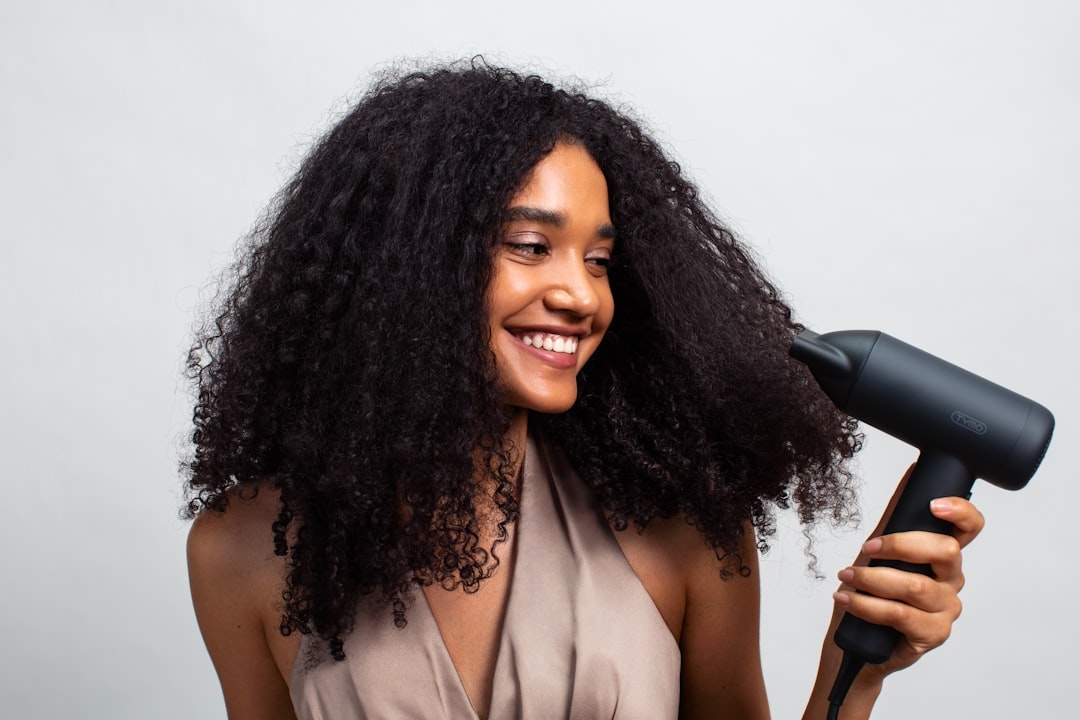
Blow-drying wavy or curly hair is trickier. You want to preserve wave or curl pattern while reducing frizz. Use a diffuser attachment or a concentrator with low-to-medium heat. Direct the dryer upward and into the curl pattern rather than downward. Hands-off technique: cup sections gently and let the diffuser do the work, rather than combing or brushing while drying. Total time: 20-35 minutes depending on curl density.
Advanced technique: apply a curl-defining cream to damp hair before drying. This makes waves hold better and reduces frizz. Products cost £8-18.
Common Mistakes to Avoid When You Blow Dry Your Own Hair
Using high heat on fine hair. Fine hair requires low-to-medium heat. High heat (above 70°C) damages delicate strands permanently. Stick to 60-65°C on fine hair.
Back-and-forth dryer motion. This creates frizz and damages the cuticle. Always move downward, root-to-tip, in one consistent direction.
Forgetting the concentrator nozzle. Without it, you have no control. Your hair dries randomly. The nozzle is essential for shaping.
Blow-drying soaking-wet hair from start. This wastes electricity and time. Pre-dry 50% of the moisture with a towel first.
Skipping the cool shot. Cool air seals the cuticle and creates shine. Skipping this leaves hair looking dull and fluffy.
Holding the dryer too close to hair. Closer than 10 cm risks heat damage and burns. Keep it 15-20 cm away.
Attempting fancy styling without mastering basic drying first. Learn to dry hair straight and smooth first. Once that’s consistent, add waves, flips, or volume techniques.
Blow-Drying vs Air-Drying: When to Use Each
Air-drying takes 2-4 hours and works only for straightforward waves or curls that naturally fall well. Blow-drying takes 15-30 minutes and gives you control over final shape and finish. For most people with busy mornings, blow-drying is practical. Air-drying is ideal for low-manipulation days or when you’re deliberately going for a casual, undone look.
Hybrid approach: partially air-dry for 30-45 minutes (removes 50% of moisture), then blow-dry for 10 minutes to shape and finish. This reduces heat exposure while maintaining control and speed.
Styling Options Once Hair is Blow-Dried
Once hair is blow-dried straight and smooth, you can add waves, curls, or texture using a curling iron or straightening iron. This is optional styling, not drying. Most beginners focus on mastering the blow-dry first, then add styling later once the foundation skill is solid.
Timeline: How Long Should Blow-Drying Take?
- Short hair (chin-length or shorter): 8-12 minutes
- Medium hair (shoulder-length): 12-18 minutes
- Long hair (mid-back or longer): 18-30 minutes
- Thick hair (add 5-10 minutes to any above)
- Very curly hair (add 10-15 minutes to any above)
If you’re consistently taking 40+ minutes, your sections are too large, your dryer wattage is too low, or you’re starting with too-wet hair. Adjust one of these variables.
FAQ
What’s the best temperature for blow-drying hair without damage?
Temperatures below 70°C (achieved with low or medium settings) are safest for regular use. Fine hair: 60-65°C. Medium hair: 65-70°C. Thick or curly hair: 70-80°C. Never exceed 90°C, which causes permanent protein damage. Most home dryers operate at 75-85°C on high. Use medium heat for daily styling, reserve high heat for thick hair or quick drying when needed.
Can I blow-dry my hair every day without damaging it?
Yes, with proper technique and products. Daily blow-drying with medium heat, a concentrator nozzle, and a cool-shot finish is safe. Damage occurs from: high heat (above 80°C) on fine hair, low-water-content hair (use conditioner before drying), or rough handling while drying. If your hair feels dry or brittle, apply a heat-protectant spray (£6-12) before drying, or reduce frequency to 4-5 times weekly.
Is a paddle brush or round brush better for beginners?
Paddle brush. Round brushes require coordinating two hands plus managing the dryer simultaneously—difficult for beginners. Paddle brushes are forgiving, require one hand, and create smooth, sleek results. Once you’ve mastered basic blow-drying with a paddle brush, experiment with round brushes for volume and waves.
Should I blow-dry towards or away from my face?
Downward always. Dry the top front sections downward so the cuticle lays down smoothly, creating shine. Upward drying lifts the cuticle, creating frizz. The exception: when drying the roots for root lift (for volume), briefly dry upward at the roots only, then finish with downward strokes.
How do I get volume and body when blow-drying?
Flip your head upside down while drying (blow-dry against the direction hair naturally falls). Or hold sections away from the scalp at 90 degrees and blow-dry the roots upward. Once roots are dry with lift, flip back upright and smooth the rest downward with a paddle brush. This creates volume without sacrificing shine.

Add Comment